Cleaning Moss Off a Flat or Low-Pitch Roof
You've got a flat roof over the extension or the garage, and lately it's gone soft and green with moss in the corners. Water sits on it after rain and takes an age to drain, and you're starting to wonder whether the moss is a sign of trouble underneath. It's a fair worry, and flat roofs do need a different eye.
A flat or low-pitch roof holds moisture in a way a steep slate one never does, which is exactly why moss loves it and why cleaning it needs care. Get it wrong and you tear the felt or split the membrane, and then you really do have a leak. Here's how to deal with moss on these roofs the safe way in Dundee.
The quick answer: clean a flat or low-pitch roof gently, lifting moss by hand and with low pressure rather than scraping or blasting, since the felt, fibreglass or membrane punctures easily.
1. Why flat roofs grow moss so readily
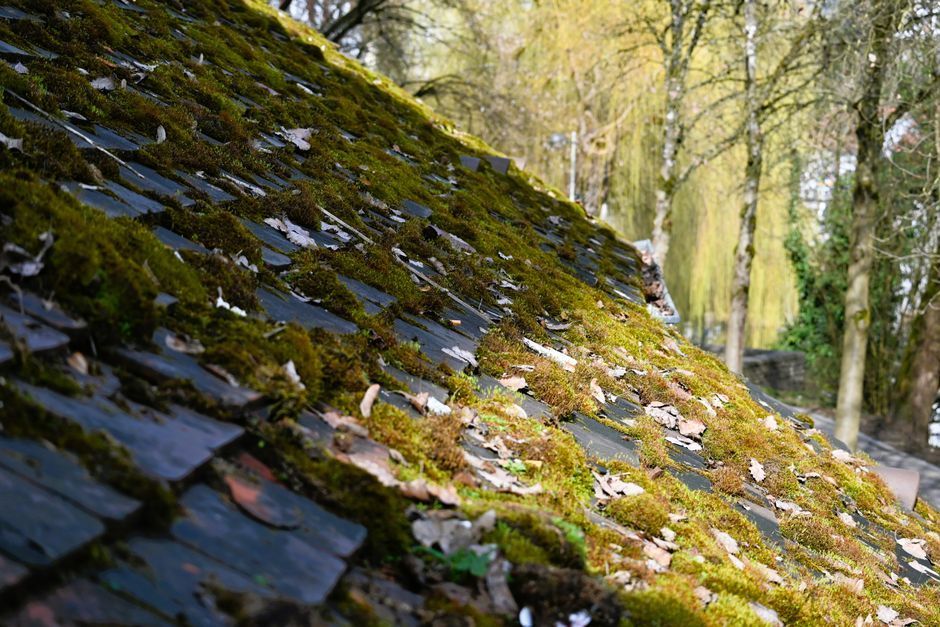
The clue is in the water. A flat or low-pitch roof drains slowly, so rainwater lingers in shallow pools and damp patches long after a shower has passed. That standing moisture is exactly the environment moss and algae want, and they settle in fast where the surface never gets a chance to dry.
Dundee makes it worse than most places. Between the rain blowing up the Firth of Tay, the coastal haar and the cold, wet winters, a flat roof here can stay damp for weeks at a stretch. Garage and extension roofs across the city, from Lochee to the Ferry, green over quicker than people expect.
2. What the moss is doing to the surface
Moss on a flat roof isn't only a looks problem. As it grows it holds water against the surface, and constant damp is hard on felt, fibreglass and single-ply membranes alike. The roots and fibres also work into any small gap or seam, and over time that opens up the weak spots.
There's a frost angle too, which matters in a Dundee winter. Water trapped in moss freezes and expands on cold nights, nudging at seams and lifting edges a fraction each time. Left long enough, a green flat roof ages faster than it should, so clearing the moss is as much about protecting the roof as tidying it.
3. Gentle removal, never a scrape or a blast
The safe way to clear moss off a flat roof is patiently and by hand, lifting the bulk of it and following up with low-pressure water. What you don't do is attack it with a stiff scraper or a pressure washer, because both will tear felt, chip fibreglass or split a membrane seam in seconds.
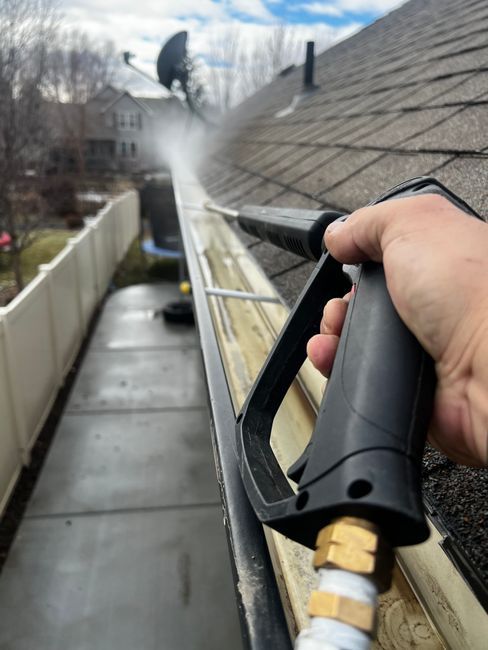
A pressure washer is especially risky on these roofs. The jet gets under laps and seams and drives water straight into the structure, and on an already damp Dundee roof that's the fast route to a leak. Low pressure and a careful hand clear the green without opening the surface up to the weather.
4. Sorting the drainage and outlets
Clearing the moss is only half the job if the water still can't get away. Flat roofs drain through outlets and small gutters that clog with moss debris and leaves, and a blocked outlet means the next downpour just pools all over again. These need clearing as part of the clean.
On Dundee's flat roofs the autumn leaf fall and the sheer volume of rain keep those outlets under pressure. If the water has a clear path off the roof, the surface dries between showers and moss struggles to get going again. Sorting the drainage is what stops you cleaning the same roof over and over.
5. Treating to slow the regrowth
Once the surface is clean and draining, a suitable biocide treatment helps keep the moss from marching straight back. Applied at the right strength for the roof material, it kills off the spores left behind and buys you a longer stretch of clear surface, much as it does on a pitched slate roof.
This matters more on a flat roof because the damp conditions that grow the moss never really let up in Dundee. Without a treatment you're back up there within a season, and every clean is another chance to nick the surface. Treating it properly means fewer visits and less handling of a roof that would rather be left alone.
6. Knowing when the roof needs more than a clean
Sometimes cleaning reveals that the moss was hiding a bigger issue, a blister in the felt, a soft spot underfoot or a split seam. A good clean is the moment those come to light, and it's worth knowing about them early rather than after the ceiling below starts staining.
Someone who works on flat roofs across Dundee will flag these things while they're up there. The city's older extensions and garages have seen a lot of weather, and spotting a failing patch during a routine clean often means a small repair instead of a full replacement. That local eye is worth having on a roof you can't easily see.
- Slow drainage: flat roofs hold water, so moss settles fast in Dundee's damp, rainy climate.
- Surface damage: trapped moss keeps the felt or membrane wet and works into seams, aged further by winter frost.
- Gentle only: lift moss by hand and with low pressure, never a scraper or pressure washer that tears the surface.
- Clear the outlets: unblock drains and gutters so water leaves the roof and moss struggles to return.
- Treat and check: a biocide slows regrowth, and a clean is the chance to catch blisters or splits early.
Frequently Asked Questions
Is moss actually damaging my flat roof?
It can be, since it holds water against the surface and works into seams. On felt and membranes that constant damp, made worse by winter frost, shortens the roof's life.
Can I just pressure wash it like a patio?
No, a flat roof is nothing like a patio underfoot. The jet drives water under the seams and into the structure, which is the quickest way to turn a mossy roof into a leaking one.
How often should a flat roof be cleaned?
Once a year is a sensible baseline in Dundee, more if it's shaded or under trees. Regular clearing of the surface and outlets stops the moss ever building up badly.
Will the moss come back after cleaning?
It will eventually, but a biocide treatment and good drainage slow it right down. The damp local climate means some regrowth is normal, just far slower when the roof is treated.
What if you find damage under the moss?
Catching it early is a good thing. A small blister or split spotted during a clean is usually a minor repair, whereas the same fault left hidden can lead to water getting into the building.
Flat roof gone green and soggy?
Ben's Roof Cleaning handles roof cleaning, moss removal and gutter cleaning across Dundee and Scotland, with over 15 years of experience. Get in touch or call 01382 236629
for a free, no-obligation quote.
Keep the water moving and the moss stays away
A flat roof asks for a gentler hand than a steep one, and a bit of understanding about why it grows moss in the first place. Clear it carefully, keep the outlets flowing and treat the surface, and you break the damp cycle that lets the green take hold. On Dundee's wet, exposed extensions and garages, that steady care is what keeps a flat roof sound for years.